Tuesday, 30 April 2013

Skype for Outlook.com Officially Launched

Microsoft has just introduced Skype video calling features to Outlook.com, thus allowing users of its email service to call friends straight from their browsers.

The integration is possible thanks to a browser plugin, currently available for Internet Explorer, Chrome and Firefox, with users being asked to connect Skype to Outlook.com using their Microsoft accounts.

Basically, this new option automatically imports all your Skype contacts to Outlook.com, thus making it possible to quickly initiate a video or an audio call.

Whenever you receive an email from one of these contacts, a small popup providing access to video and audio call options is displayed to initiate a conversation with just one click.

At this point, the new feature is only available in the United Kingdom, but the Skype team promised that both the United States and Germany would get it in the upcoming weeks.

Read more

10-Inch Tegra 4 Android Tablet Prepared by HP


With NVIDIA's Tegra 4 chip official, the company's collaborators are doing their best to put together tablets powered by it. HP is one of those companies, having developed the SlateBook 10 X2.

HP hasn't actually introduced the tablet, and probably won't for a short while yet, but there are other ways for information to reach the web.

In this case, the device was spotted in an AnTuTu benchmark. Not the most informative of sources, but it is better than nothing.

The only information included in the benchmark was the clock speed of the tablet (1810 MHz) and the operating system (Android 4.2.2 Jelly Bean).

Keep in mind, though, that the benchmark may very well be a fake. The score of 27,259 is definitely high enough to raise questions in regard to authenticity.
Read more

iOS 7 Said to Be “Very, Very Flat,” May Unsettle Some Users

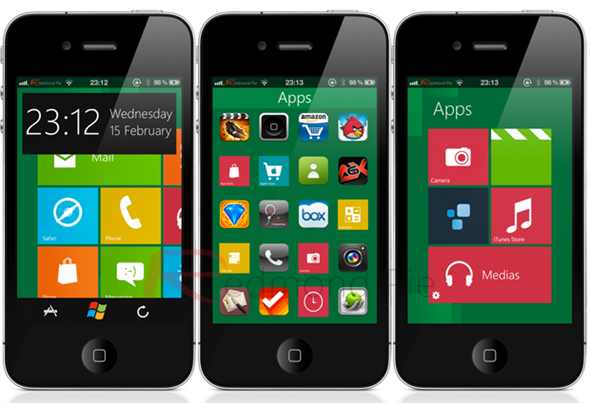
Sources familiar with Apple’s iOS internal testing say we’re in for some radical changes, especially on the UI side. The interface is said to be as flat as Windows Phone’s Metro.

One source tells 9to5mac that the new iOS 7, set to be unveiled at WWDC in June, is “very, very flat.”

The site says it’s “potentially unsettling” for longtime fans of the platform. Currently, iOS boasts skeuomorphic design that gives the graphics a more life-like look.

Another person familiar with the matter said, “the interface loses all signs of gloss, shine, and skeuomorphism seen across current and past versions of iOS.”

Yet another person described iOS 7 as having “a level of ‘flatness’ approaching recent releases of Microsoft’s Windows Phone ‘Metro’ UI.”

Customers won’t find it more difficult to use iOS 7, the sources said, adding that while the software does look different, its core services (including the stock apps) will “mostly operate in a similar fashion to how they do today.”

The major changes are a new icon set for all the apps that ship with the software by default, as well as new tool bars and tab bars.

The next batch of iOS devices prepared by Apple will have “polarizing filters to decrease viewing angles of on-lookers,” according to the report.

Another thing that got leaked is the actual code name of the software. Apple refers to iOS 7 as “Innsbruck” internally.

Finally, Apple has reportedly implemented a type of information panels across the iOS 7 UI, a system that resembles Notification Center.

iOS 7 is scheduled to debut at Apple’s annual Worldwide Developers Conference on June 10. It is unclear whether the company will actually ship the software then, or whether it will just offer us a demo.

OS X 10.9 is also expected to make an appearance at the event.
Read more

Saturday, 27 April 2013

CISPA Is Pretty Much Dead for Now

The controversial Cyber Intelligence Sharing and Protection Act, better known as CISPA, has little chances of passing to the Senate in its current form.

According to a Mashable report, the House of Representatives’ version of the Act won’t reach the Senate in its entirety, but some of its features might be included in other bills.

CISPA passed the House last week, for the second time, with support from all parties, despite the fact that the White House has issued a veto threat if privacy and civil liberties issues are not addressed.

Another report says that staff and senators are dividing the issues and the key provisions that are absolutely necessary and they’ll be drafting separate bills.

CISPA is expected to stall in the Senate as they debate about each facet of the issue. However, even if the Act doesn’t pass in its entirety, some of its elements might be found in other bills in the near future.

In its current form, CISPA allows businesses and federal agencies to share information regarding cybersecurity threats. At the same time, the bill also poses a threat to the privacy of all Internet users.

Those who support the Cyber Intelligence Sharing and Protection Act have strong business interests and argue that sharing is necessary to deflect hackers in real time.

However, opponents of the bill claim that such a law means compromising online privacy. Furthermore, it would offer protection to the companies that share data with the government.

On April 22, nearly 400 websites have joined Anonymous in protest by closing down regular activities and displaying an anti-CISPA banner, much like they did last year when they opposed SOPA (Stop Online Piracy Act).

Major companies have been absent from this protest yet again, as they were last year when Internet users from all over the world were making a point of telling legislators that they have no right to control their Internet activity in order to protect business interests.
Read more
 
DMCA.comGags