Monday, 13 May 2013

RAKBANK and Bank of Muscat Believed to Be Victims of $45M / €34M Cyber Heist

Last week, US authorities charged 8 individuals believed to be involved in a scheme in which fraudsters withdrew a total of $45 million (€34 million) from ATMs all around the world. Prosecutors haven’t named the targeted companies.

However, Times of India has learned that the companies targeted by the cybercriminals might be EnStage and ElectraCard Services. The former operates from Bangalore, India, and is based in California, and the latter is based in Pune, India.

ElectraCard Services processes prepaid travel cards for National Bank of Ras Al Khaimah, or RAKBANK. By gaining access to ElectraCard’s systems, the attackers were able to steal $5 million (€3.8 million) from RAKBANK accounts on December 21, 2012.

EnStage on the other hand processes card payments for Oman’s Bank of Muscat. Sources close to the financial institution have told the Times of India that the bank lost $40 million (€30.8 million) in a heist that took place in February 2013.

Govind Setlur, CEO of EnStage, says the company has implemented additional security measures since the incident took place.

“Our customers were adversely affected by this sophisticated crime. We are deeply committed to information security, and we will continue to take all reasonable measures to ensure our networks are secured from criminal actors,” he said.

In addition to the United States, Germany has also arrested a couple of individuals, Dutch citizens, suspected of being involved in the operation. However, ATMs from a total of 27 countries have been used to withdraw the large amounts of money.

After breaching into the systems of the financial institutions, the perpetrators removed the withdrawal limits to make sure they could steal unlimited amounts of money.

Eight individuals, suspected of being part of the New York-based cell, have been charged. One of them – Alberto Yusi Lajud-Peña, believed to be the cell’s leader – was reportedly murdered in the Dominican Republic back in April.
Read more

Sony Xperia ZR Goes Official with 4.55’’ Screen, Waterproof Capabilities

Today, Japanese mobile phone maker Sony Mobile made official a new smartphone in its popular Xperia lineup, namely the waterproof Xperia ZR.

According to Sony, some of the main features of the new device include the highest level of water-resistance, especially when it comes to capturing photos and Full HD videos underwater.

The new handset arrives on the market with a 4.55-inch touchscreen display capable of delivering a 720p resolution, as well as with a 1.5GHz quad-core Snapdragon S4 Pro processor packed inside, and 2GB of RAM.

Xperia ZR was also unveiled with 8GB of internal memory, as well as with a microSD memory card slot packed inside, with support for up to 32GB of additional storage space.

The mobile phone also features a 13-megapixel photo snapper on the back, with Sony Exmor RS for mobile image sensor and support for full HD video recording, as well as a front camera for making video calls while on the go.

“The Xperia ZR pushes the boundaries on where and how consumers can use the full potential of their smartphone. By combining Sony’s leading camera technology with the highest level of water-resistance, you will never miss another moment,” said Calum MacDougall, director of Xperia Marketing at Sony Mobile Communications.


“Bringing together the best of Sony’s leading technology, media applications and easy one-touch connectivity with the largest ever range of NFC-enabled accessories, the Xperia ZR delivers the unique smartphone experience that people can expect from Sony.”

The new device also sports PlayStation certification, 3.5 mm audio jack, Wi-Fi and Bluetooth 4.0 connectivity, DLNA, NFC, Xperia Link, and the usual set of sensors.

Sony announced the Xperia ZR with Android 4.1 Jelly Bean loaded on top right from the start, as well as with a series of exclusive Sony applications and services, such as WALKMAN, and Album and Movies.

The mobile phone is set to arrive on shelves before the end of the second quarter of the year in Black and White flavors. No specific info on pricing has been provided as of now.
Read more

Apple Will Bypass Your iPhone’s Passcode If Law Enforcement Asks It To

Federal agencies looking to catch criminals by peeking into their iPhones are asking Apple to bypass their passcodes and supply them with the necessary information to make the bust.

And Apple, more often than not, agrees. In fact, they reportedly have this so-called waiting list where feds take turns to get their mitts on precious information stored on wanted people’s iPhones.

All Apple does is use its engineering geniuses to bypass the phone’s passcode, download the decrypted contents onto an external memory device, and ship it to the law enforcement agency that needs it.

At first glance, this sounds like a really awesome approach to help the authorities to get their hands on the bad guys. But in reality, this raises serious concerns about the security of our data.
Read more

Saturday, 11 May 2013

8 Members of Cybercrime Ring Charged, Accused of Stealing $45M / €34M from Banks

United States prosecutors have charged 8 individuals suspected of being involved in a massive cybercrime ring that caused losses of $45 million (€34 million) to financial institutions from all over the world in a matter of hours.

The 8 suspects are believed to be the New York cell of an international criminal organization. Authorities allege that the defendants and their co-conspirators managed to withdraw around $2.8 million (€2.1 million) from ATMs in the New York City area in less than 24 hours.

The individuals – aged between 22 and 35 – have been charged, depending on their roles, with money laundering, money laundering conspiracy, and conspiracy to commit access device fraud.

Seven of them were arrested, while the eighth defendant, Alberto Yusi Lajud-Peña, aka “Prime” and “Albertico,” was reportedly murdered in the Dominican Republic in late April. Alberto Yusi Lajud-Peña was believed to be the leader of the New York-based cell.

According to court documents, the cybercrime ring used sophisticated hacking techniques to breach into the systems of global financial organizations from which they stole prepaid debit card data. By hacking into the networks of these companies, the crooks also managed to eliminate the withdrawal limits.

They utilized the stolen payment card data to make withdrawals from ATMs located all over the world.

Authorities say the crooks used a technique that’s known in the criminal underground as “Unlimited Operation.” They’re called “Unlimited Operations” because they allow cybercriminals to access “unlimited” proceeds.

Presumably, the defendants and their accomplices conducted two such operations between October 2012 and April 2013. 26 countries are involved in this case.

“As charged in the indictment, the defendants and their co-conspirators participated in a massive 21st century bank heist that reached across the Internet and stretched around the globe. In the place of guns and masks, this cybercrime organization used laptops and the Internet,” stated Loretta E. Lynch, United States attorney for the Eastern District of New York.

“Moving as swiftly as data over the Internet, the organization worked its way from the computer systems of international corporations to the streets of New York City, with the defendants fanning out across Manhattan to steal millions of dollars from hundreds of ATMs in a matter of hours.”

If convicted, the individuals could be sentenced to a maximum of 10 years in prison for each of the money laundering counts and 7.5 years for the conspiracy to commit access device fraud charges.
Read more

You'll Have to Pay for Some YouTube Videos from Now On

After plenty of speculation and rumors, YouTube has gone ahead and introduced subscriptions as an option for videos on the site.

Now, publishers can decide whether to make their money from ads or charge viewers a monthly flat rate for access to the videos.

YouTube is starting out with a few partners, and the feature is not available to most channels yet. Channels that do get the subscription option can charge anything starting from $0.99 per month.

There is a 14-day trial per channel, so viewers can determine whether they want to pay or not and the possibility to pay a yearly rate.

"For example, Sesame Street will be offering full episodes on their paid channel when it launches. And UFC fans can see classic fights, like a full version of their first event from UFC’s new channel," YouTube explains.

There are over one million channels making money on YouTube now, the site boasts, but all of them do it from ads. Many had requested other options and this is YouTube's answer. It remains to be seen though whether people will actually start paying for stuff on YouTube.
Read more

iOS 7 Will Probably Look a Lot like This – Video

Simply Zesty has commissioned its art director, Philip Joyce, to create a concept of the forthcoming iOS 7 based on the rumors that it will have a “flat” interface. The result is astonishing.

Embedded above is the clip in question, which should make both Simply Zesty and Jonathan Ive (Apple’s designer) very proud.

Apple is said to have prepared a flatter version of its mobile operating system for unveiling at WWDC this summer, and iOS 7 will be it.

Featuring square-ish iconography, widgets, lock-screen shortcuts, and pretty much everything iOS is currently missing, the conceptual iOS 7 presented by Philip Joyce is marvelous in every way.

The final seconds of the clip show an appropriate comparison between Philip’s work and the current iOS UI. Needless to point out, the need for an overhaul hits you right in the face.


Read more

Thursday, 9 May 2013

Name.com Hacked, Company Resets Customer Passwords

Name.com has started sending out notifications to customers, informing them about a data breach. The company believes that hackers might have accessed usernames, email addresses, encrypted passwords and encrypted credit card information.

The Internet registrar says it stores the private keys needed to access credit card information in a separate remote location that hasn’t been compromised, so it’s unlikely that the cybercriminals can access it in a usable format.

EEP codes, which are required for domain transfers, are also said to be safe, and there’s no evidence to suggest that customer data has been used for fraudulent activities.

As a precaution, all customers are required to reset their passwords before logging in to their accounts. Additional security measures have also been implemented to avoid future incidents.

“It appears that the security breach was motivated by an attempt to gain information on a single, large commercial account at Name.com,” the notification sent to customers reads.

However, there’s more to the story. The Hack The Planet (HTP) group has taken responsibility for the attack.

The hackers claim that Name.com is just one of the many high-profile organizations they’ve targeted, including the National Vulnerability Database, Linode, Xinnet, Melbourne IT, Moniker, MIT, Symantec, and even security firm Sucuri.

In the case of Xinnet, they have allegedly gained access to 5.5 million domains.

HTP says it has targeted Linode to get back at a group that impersonated another crew called “ac1db1tch3z.”

“We quickly switched into a fallback network and found out they used SwiftIRC. SwiftIRC's nameservers were none other than Linode,” the hackers explained.

In the process, they have also breached Name.com, which is Linode’s registrar.

HTP says the Linode worked with the FBI – which had some informants in HTP. Apparently, the FBI was the one who ordered Linode to disclose the breach.

The hackers promised Linode they would “shred” the data obtained from their systems, but the FBI didn’t trust HTP.
Read more

Microsoft Planning to Buy Nook Media for $1 Billion (€759 Million) – Report

Microsoft CEO Steve Ballmer is out for shopping these days, with sources familiar with the matter now claiming that the Softies are planning to take over Noble’s Nook Media division.

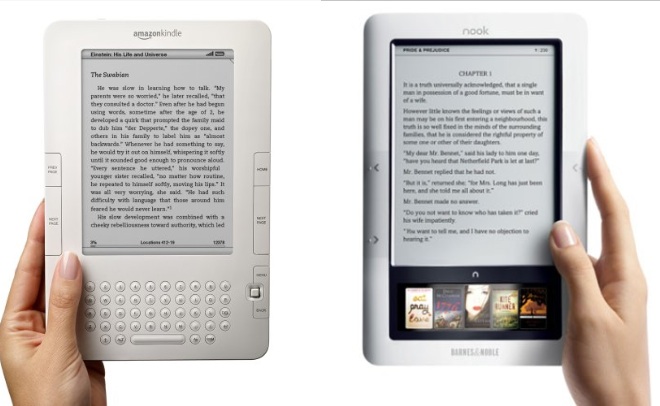
Even though there are no official details on this, TechCrunch reports that Microsoft is willing to pay as much as $1 billion (€759 million) for a significant part of the subsidiary, including the Nook tablet and the eReader business. The college textbook division, on the other hand, doesn’t seem to be covered by the deal.

Citing leaked internal documents, the same source reports that Nook Media has already worked out a plan for the next couple of years, most likely in case the deal with Microsoft goes through.

It appears that the company might pull the plug on Nook tablets using the Android operating system by 2014 and focus solely on third-party devices running its own software application.

While negotiations are yet to be confirmed, such a deal would pretty much make sense for the software giant, especially because sources familiar with the matter have already confirmed that Microsoft is planning to release its very own e-reader.

Microsoft has already invested $300 million (€227 million) for a 16.8 percent in a joint venture with Barnes and Noble, but until now, the tech giant is yet to develop something really exciting based on this deal.

Truth is, Barnes and Noble has indeed launched a Windows 8 application for Nook users, providing adopters of Microsoft’s new operating system with some special exclusive goodies.

In addition, sources familiar with the matter have indicated that the two companies were working on several projects, but no other specifics have been provided.

Of course, take all of these with a pinch of salt until Microsoft issues an official statement on the matter.
Read more

The Best Google Glass Apps So Far

While the Google Glass is still months away from being available for everyone to buy, but apps seem to be pouring.

Some interesting apps have already hit the market and the number is rapidly growing.

Given the device’s tech specs, it might not be a good idea to drown it in apps if you want it to work fast. But that is true for most tech devices, especially those that run on Android.

So, which of the apps that have been released so far seem most appealing?

Well, with a price tag of $1500 (€1140), Google Glass will surely appeal to those who don’t mind spending a lot of money on gadgets.

That means adults that earn well or teenagers who will beg their parents for one on their next birthday, also promising to do all the housework.

To these groups, you can also add people with a lower monthly paycheck that are willing to put aside money to buy the device.

That being said, social networking is such an important component of our daily Internet life that it can’t be ignored.

So far, two third-party apps have been released with this purpose, one for Twitter and one for Facebook.

GlassTweet lets you tweet photographs straight to your account. While Twitter is already testing out its own official app, there hasn’t been any news on that front, so we can limit ourselves to this one.

The app lets users send pictures to a contact called “Tweet,” so it doesn’t get easier than that.

A similar app that lets users post pictures to Facebook has also been launched recently. “Glass to Facebook” goes a step further and even puts together a photo album for you, where all Glass pictures are stored.

Google created another important app that can be great on a daily basis. It comes preinstalled with the Glass and it lets you read your mail.

The Gmail app is absolutely essential to those who depend on their emails for works. It doesn’t even matter if your email account isn’t primarily on Gmail since you can easily set up a link between two addresses and have the emails forwarded to Gmail.

Last but not least is Winky. The app lets you take pictures by winking at it. Sure, it might look awkward to outsiders, it might even feel awkward to do it, but you can’t deny how interesting it is.

Having the ability to take pictures so easily with such a device sounds fun and innovative.

So there you go; a handful of apps that are essential for Google Glass. As more will be released, the list might change.
Read more

Wednesday, 8 May 2013

Windows Boss Says a Start Button “Might” Be Coming Back


Microsoft has finally confirmed that Windows Blue would be released next month, but the company hasn’t provided too many details about the next major release.

But Julie Larson-Green, the new Windows boss after Steven Sinofsky’s departure, said at the Wired Business Conference in New York that Blue would pay much more attention to user feedback, hinting that a Start button is indeed on the table for the time being.

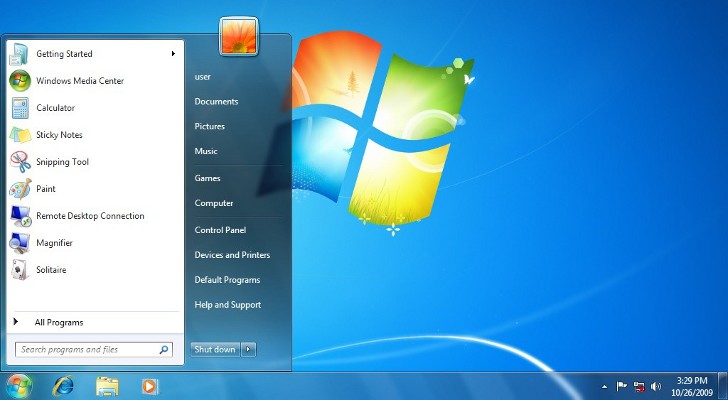
Larson-Green explained that Windows 8 already came with a Start button-like feature, available via a right-click in the bottom left corner, but users apparently want to have such a feature always on their screens.

“It's hidden, so some people like the comfort of having it show up on the screen all the time, so they just know their home place and where to go,” she said.

What’s more, the new Windows boss explained that Microsoft’s way to address user complaints in the upcoming Windows Blue “might” be helpful for some, suggesting that a different kind of a Start button is indeed in the works.

Sources familiar with the matter previously reported that Microsoft is indeed planning to bring back the Start button in Windows Blue, but instead of launching a Start Menu, it would most likely act as a simple shortcut for the Start Screen.

This means that Microsoft isn’t willing to restore a full-featured Start button, but only a quick way to access the Start Screen that uses the same designed as the traditional Windows feature.

Such an option could indeed be helpful for some, but many users might actually be disappointed with it, so third-party Start Menu apps could continue experiencing a terrific success. It remains to be seen if Microsoft decides to allow users to replace the upcoming Start button with a third-party one launching a classic Start Menu.
Read more

Tuesday, 7 May 2013

Microsoft Confirms Windows Blue, Reveals Changes

Microsoft has already confirmed an “internal set of plans” called Blue, but no other details on the project have been provided until now.

Tami Reller, Microsoft’s chief marketing officer and chief financial officer, confirmed in an interview posted on the official Windows blog that a Blue upgrade was coming “later this year,” while also revealing a few details about the upgrade.

Reller said that Blue would serve as the foundation for a wider array of devices, most likely smaller tablets, suggesting that 8-inch tablets powered by the new operating system were indeed on their way.

“Windows Blue is a codename for an update that will be available later this year, building on the bold vision set forward with Windows 8 to deliver the next generation of tablets and PCs,” Reller said.

“It will deliver the latest new innovations across an increasingly broad array of form factors of all sizes, display, battery life and performance, while creating new opportunities for our ecosystem. It will provide more options for businesses, and give consumers more options for work and play.”

While Reller provided absolutely no details on the launch date, sources familiar with the matter hinted that Windows Blue could arrive in beta version in June at the BUILD developer conference. The full version of the operating system is in the pipeline for an August or September release.

Several builds have already been leaked, giving us a glimpse into the changes that could be brought by this new Windows version.

It appears that the Redmond-based tech giant is working to improve not only the user interface, but also the Metro environment, with some sources hinting that an option to skip the Start Screen and boot directly to desktop is also possible.

Last but not least, Windows Blue is also rumored to witness the return of the Start button, as Microsoft has expressed its intentions to listen to customer feedback and make future products a bit more familiar.
Read more

Monday, 6 May 2013

Portal Is Now Available on Linux, via Steam

Finally, Valve had the pleasure of releasing the Portal game for all Linux operating systems, through the Steam platform.

Valve officially released the Portal game back in 2007, along with Team Fortress 2 and Half-Life 2. Some say that Portal has become one of Valve’s most successful game titles.

Today we are happy to announce that the original Portal game is now available on all Linux distributions that support the Steam for Linux client.

Portal is a first-person puzzle-platform video game, comprized of a series of puzzles that must be solved by teleporting the player's character using "the Aperture Science Handheld Portal Device".

Those of you who own the Windows version of Portal, you will automatically have a copy of the game for the Linux platform, in your Steam account.

You can buy the game right now via Steam, for only $9.99 or 6.99€.


Read more

Experts Identify 9 Full Sandbox Bypass Exploits Affecting IBM Java


Researchers from Security Explorations have identified a total of nine ways to completely bypass the IBM Java sandbox. Of these nine exploits, five are new ones and four are old issues that haven’t been properly addressed.

According to Adam Gowdiak, the founder and CEO of the Polish security firm, the five new full sandbox bypass exploits are based on a total of seven vulnerabilities. In addition, each of the four old improperly fixed issues can be leveraged for a full sandbox bypass.

The old bugs were reported by Security Explorations to IBM back in September 2012. The company addressed them soon after.

However, the experts found that the attacks still worked after they made a couple of modifications to the exploit code.

“The problem with IBM fixes is that they aim to detect only one specific exploit vector and miss many other scenarios,” Gowdiak told Softpedia.

As far as the new security holes are concerned, the expert says most of them are caused by the “insecure use or implementation” of the Java Reflection API.

Proof of concept codes have been developed for each of the vulnerabilities.

“Each of them demonstrates a complete IBM J9 Java VM security sandbox bypass. Each of them was verified to work in the environment of the following version of IBM software: IBM SDK, Java Technology Edition, Version 7.0 SR4 FP1 for Linux (32-bit x86), build pxi3270sr4fp1-20130325_01(SR4 FP1),” Gowdiak added.

IBM has been provided with vulnerability details along with source and binary codes for the POCs.

Last week, we learned of the existence of an arbitrary code execution flaw in IBM Notes. IBM has released an interim fix for the issue.

However, Gowdiak highlights the fact that these latest flaws are interesting in the context of the IBM Notes vulnerability because Java can be embedded in Notes emails.
Read more

Internet Explorer 8 Flaw Used to Hack Nuclear Weapons Researchers

A security flaw found in Internet Explorer 8, the world's most popular browser according to recent stats, has been used to launch attacks aimed at US nuclear weapon scientists.

A report published by ZDNet and citing several security firms across the world reveals that a recently-discovered security flaw in Microsoft's browser allowed hackers to launch a number of watering hole attempts in an effort to exploit US government computers.

Systems belonging to the US Department of Labor and the US Department of Energy have been hit recently, the report states, but it's not yet clear whether hackers managed to access any secret files or not.

As far as the attackers go, some sources claim that Chinese hackers are behind this new exploit, even though no specifics have been provided.

Read more

Sunday, 5 May 2013

How Google Could Improve Glass Before Mainstream Launch

The Google Glass has captivated everyone’s attention, but until the product reaches the large masses, there’s still a year left. And in this time, the product could use some improvements.

While reviews have been quite favorable for the high tech glasses, some issues have resurfaced, while others could become serious problems in time that could affect how the product is received.

When people pay $1,500 on Google Glass, they expect excellency.

While the price isn’t completely untouchable for regular people, they’d have to save money for it. And there lies the demand that Google make this device as perfect as possible.

One thing that the Glass desperately needs is a hardware improvement. The device’s batter life isn’t what Google promised.

When they said that the device should regularly last for about half a day if people did’t take too many pictures or record lengthy videos, they didn’t mention that “half a day “ equals four hours.

The device also needs to be a bit more flexible and resemble regular glasses. That means that it should have foldable arms.

As such, when you want to take the pair off, you don’t look awkward carrying them around.

The Internet giant should always take several steps towards better protecting the device.

Since Glass works with Android, Google’s extremely flexible operating system, jailbreaking the device wasn’t a very difficult task.

This makes Glass vulnerable and no one wants to pay that much money if your data and privacy aren’t guaranteed.

The last and most important thing Glass needs is the apps. You can’t do much without having proper apps. This can be said about computers, smartphones and now, wearable tech.

If developers don’t come up with killer products, it’s hard to believe people won’t lose interest in the gadget after a while.
Read more

Debian 7.0 Wheezy Has Been Officially Released

The Debian project proudly announced today, May 5, that after months of hard work the final version of the highly anticipated Debian 7.0 Linux operating system is now available for download.

Dubbed Wheezy and powered by Linux kernel 3.2 and X.Org 7.7, Debian 7.0 includes an improved installer, multiarch support, a complete set of multimedia front-ends and codecs, and various specific utilities to deploy private clouds.

"Multiarch support, one of the main release goals for "Wheezy", will allow Debian users to install packages from multiple architectures on the same machine. This means that you can now, for the first time, install both 32- and 64-bit software on the same machine and have all the relevant dependencies correctly resolved, automatically."

"The installation process has been greatly improved: Debian can now be installed using software speech, above all by visually impaired people who do not use a Braille device." was stated in the official release announcement.

Highlights of Debian 7.0:

• Linux kernel 3.2;
• kFreeBSD kernel 8.3 and 9.0;
• X.Org 7.7;
• GNOME 3.4;
• KDE Software Compilation 4.8.4;
• Xfce 4.8;
• Icedove 10;
• Iceweasel 10;
• LibreOffice 3.5.4;
• OpenJDK 6b27 and 7 Update 3;
• GIMP 2.8.2;
• GNU Compiler Collection 4.7.2;
• Apache 2.2.22;
• Asterisk 1.8.13.1;
• MySQL 5.5.30;
• Nagios 3.4.1;
• Perl 5.14.2;
• PHP 5.4.4;
• PostgreSQL 9.1;
• Python 2.7.3 and 3.2.3;
• Samba 3.6.6;
• Tomcat 6.0.35 and 7.0.28;
• Xen Hypervisor 4.1.4.

Debian 7.0 also provides access to more than 36,000 ready-to-use software packages, which are built from nearly 17,500 source packages.

Debian 7.0 Wheezy is distributed as installable DVD ISO images, supporting both 32-bit and 64-bit architectures, as well as EABI ARM, PowerPC, Hard Float ABI ARM, SPARC, kFreeBSD 64-bit PC (amd64), Intel Itanium IA-64, MIPS (little endian), MIPS (big endian), kFreeBSD 32-bit PC (i386), IBM S/390, and IBM System z.
Read more

Friday, 3 May 2013

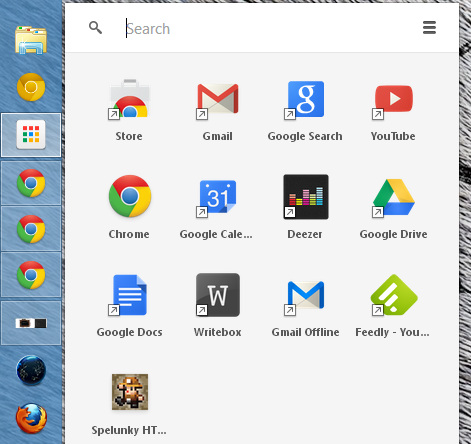
Chrome Debuts Next-Generation Apps, Old Apps Become "Websites"

Google is slowly moving ahead with the next-generation packaged apps for Chrome. These are "true" apps, they can live in standalone windows, they work offline as long as it makes sense, and have access to some deeper functionality.

As far as Google is concerned, these are Chrome apps and not everything that came before them. And it's emphasizing that point by exposing them to dev channel users in the Chrome Web Store.

If you're running the dev channel Chrome or Chrome OS, you'll notice there's a new Apps section in the Web Store and that the old Apps section is now called Websites.

This is where you'll find everything Google used to call apps, both hosted apps, aka links to websites, and legacy packaged apps.

Google unveiled the next-generation packaged app API almost a year ago and has been working on it since.

It has only now gotten to the point where the apps built on this API are ready for the public and still only for dev channel users who are supposed to be more tech-savvy and more accustomed to bugs.


"Many of these apps are works in progress, which is why we're only making them easily available on Chrome’s dev channel. If you've written a packaged app, or are working on one, now is a great time to get some early feedback and polish your app before Chrome packaged apps become more broadly available," Google explained.

"A number of developers have taken advantage of the early preview to publish apps that demonstrate the new powerful capabilities of the packaged apps platform. If you're looking for inspiration, we've highlighted a few of them for you to try out in the Web Store’s Apps category," Google added.

If you do decide to install one of the new packaged apps, you'll be asked whether you want the desktop app launcher as well. This feature has also been in the works for a few months. Google recently added new icons for it to the Chrome binary in anticipation of this wider release for packaged apps.
Read more

Hotmail Is Officially Dead


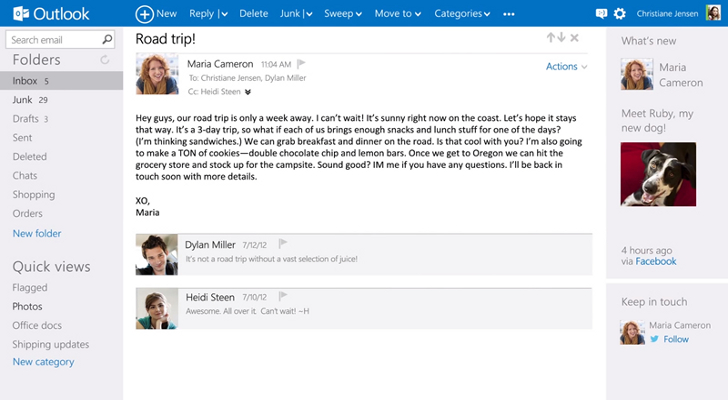
Microsoft has just announced that it finally completed the email transition to Outlook.com, which means that the old yet extremely popular Hotmail has been officially retired.

The tech giant says that moving 300 million active accounts to Outlook.com was a real challenge, as the company had to preserve more than 150 million gigabytes of data, including emails, calendar, contacts, folders and personal preferences.

Users can still use their @Hotmail email addresses, but instead of the classic interface, they will be provided with the modern and fresh look of Outlook.com.

Microsoft has also debuted two new features for its email platform, including SMTP support and deeper SkyDrive integration to share files without leaving the inbox.

“Our belief is that as people start using the new experience, they will come to love it even more than they loved Hotmail. We are keenly listening to what our customers have to say, and we'll make the right set of adjustments to ensure that we make the experience as great as it can be,” Microsoft noted.
Read more

Wednesday, 1 May 2013

Google Glass Tutorial Shows You How the Device Works


Google Glass has so far been open only to developers, but now the company has finally released a short tutorial that shows the masses what the product can do and how it can be operated.

Google’s futuristic device has been under the spotlight ever since its debut, so many questions have been asked about what it is like to wear them or how practical they are.

The tutorial released by the Internet giant shows the “home screen” of the device, which is basically a clock.

Then, by sliding your finger over the touch-pad, which is the longer area on the side of the glasses, you can browse through your content.

For instance, you can read news, check the weather and send various files, such as photos, to your friends and family who are saved as contacts in the device.

Since there’s still a year until Google will release the device to the larger population, it is unknown what kind of improvements or modifications they will bring to the operating system.


Read more
 
DMCA.comGags